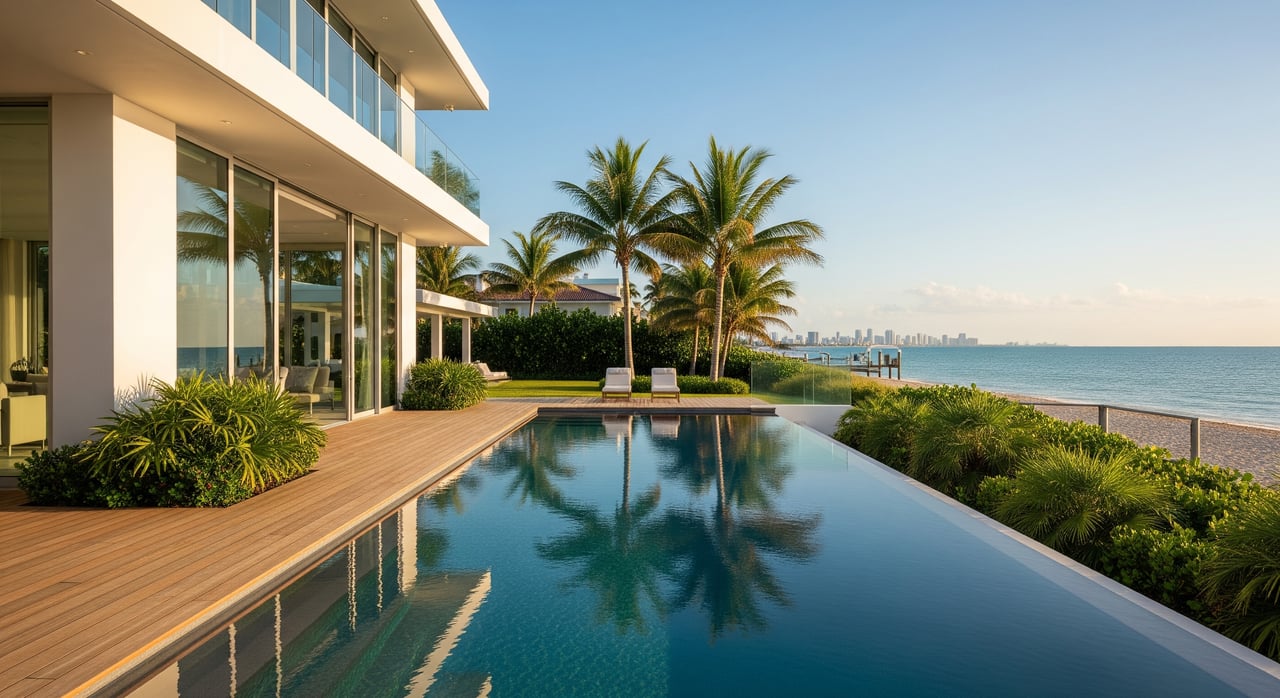
If you have toured a few Miami Beach trophy homes, you have seen prices swing by millions even when two properties look similar at first glance. That gap is not random. It reflects a set of measurable factors that sophisticated buyers use to value rare waterfront assets on a narrow barrier island.
In this guide, you will learn the exact levers that move price in Miami Beach, how to measure them, and a clear framework you can use to compare properties with confidence. Whether you plan to buy, sell, or hold, you will come away with a practical checklist that mirrors how top advisors evaluate these homes. Let’s dive in.
Waterfront orientation
Waterfront orientation is the first filter in Miami Beach. Buyers pay premiums for certain categories because of view quality, wave exposure, navigation, and scarcity.
- Direct oceanfront offers unobstructed horizon views and beach access.
- Bayfront on Biscayne Bay delivers wide water and skyline views plus calmer boating water.
- Intracoastal or causeway views vary by noise and traffic exposure.
- Wide canal or lagoon frontage can be private and navigable, but typically prices lower than ocean or wide bay.
Locally, a common metric is price per linear foot of private water frontage. Oceanfront and wide bay parcels usually command the highest per‑foot pricing because supply is limited and views are top tier.
What to measure
- Orientation tag: ocean, bay, canal, lagoon.
- Linear water frontage in feet and docking capability.
- Any public access easements along the water line.
- Historical aerials to confirm shoreline changes.
Lot and frontage
Lot geometry drives what you can build and how the property lives. Longer linear frontage and regular shapes typically earn a premium. Small changes in frontage or depth can change the buildable envelope after setbacks, which can shift value more than you might expect.
In trophy segments, frontage often trumps house size because frontage is finite. That said, a lot with strong allowable floor area can still be highly valuable even with modest frontage.
What to measure
- Lot area, linear frontage, and depth from parcel records and surveys.
- Buildable area after setbacks, easements, and lot coverage limits.
- Potential for expansion or subdivision within zoning.
View quality
Not all water views are equal. Buyers prize unobstructed ocean horizons, wide bay panoramas, and dramatic skyline scenes. Sun orientation can matter too. Sunrise and sunset experiences shape daily living and market appeal.
The permanence of a view adds value. Views protected by zoning, height limits, or the absence of developable adjacent lots tend to command higher prices. If a nearby site can build taller and block a corridor, the market discounts that risk.
What to measure
- Direction the primary rooms face and angle of view.
- Height limits on neighboring parcels and pending permits next door.
- Distance to potential obstructions.
Architecture and upgrades
Design pedigree and true turnkey condition move the needle. Homes by notable architects, with custom millwork and curated finishes, trade at a premium over generic builds. Buyers also separate structural and resiliency upgrades from simple cosmetic refreshes.
Hurricane‑rated windows and doors, elevated foundations, reinforced roofs, and modern mechanicals increase confidence and protect long‑term value. Cosmetic updates alone do not close the gap if core systems are dated or unpermitted.
What to review
- Year built, architect or builder pedigree, and scope of renovations.
- Proof of structural work and flood mitigation, not just finishes.
- Ages of roof, HVAC, electrical, and plumbing.
- Building permits and completion documentation.
Privacy and access
For high‑net‑worth buyers, privacy is a feature. Gated yards, generous setbacks, mature landscaping, and discrete service entrances increase appeal. Private docks that keep vessels out of public view help as well.
Proximity to public beaches, crowded commercial corridors, or high‑traffic nightlife can reduce perceived privacy for some buyers. Others value walkability and quick access. The premium depends on your priorities and the buyer pool in the current market.
What to check
- Distance to public access points and rights‑of‑way.
- Existing vegetative buffers and sightlines from the street or water.
- Location relative to nightlife and commercial activity.
Scarcity and rules
Miami Beach’s pricing is shaped by structural scarcity. It is a narrow barrier island with finite oceanfront and limited wide bay parcels. Local zoning, height limits, and historic preservation overlays further restrict redevelopment in many sub‑markets.
Coastal construction codes and permitting add time and cost to rebuilds or major upgrades. Floodplain, seawall, and docking rules shape what you can do on the water side. These constraints support trophy pricing for existing, well‑located assets that already solve for design, elevation, and docking.
Permitting realities
- Expect elevated foundations and wind‑borne debris protection under local code.
- Historic districts can limit demolition and exterior changes.
- Seawall and dock standards affect design and maintenance budgets.
Carrying costs
Net ownership cost affects what buyers will pay. The market weighs property taxes, wind and flood insurance, any association fees, and ongoing maintenance for seawalls, docks, and grounds. On unique properties, lender underwriting and loan‑to‑value limits can also shape demand, especially when features are non‑standard.
High recurring costs can suppress bids. Clear documentation and quotes help buyers price risk accurately and move forward with confidence.
How to estimate
- Current or recent insurance quotes for wind and flood.
- Property tax assessments and any homestead considerations.
- HOA or building budgets if applicable.
- Seawall, dock, and landscape maintenance projections.
Climate and flood risk
Buyers analyze flood zone designation, storm surge exposure, and the home’s elevation relative to required base flood levels. Near‑term insurance and mitigation costs are key inputs. Longer‑term sea level rise projections also shape buyer psychology and some lenders’ views.
Homes with resilient design, verified elevations, and mitigation features tend to hold premiums better because they reduce uncertainty.
Data points to pull
- FEMA flood zone and base flood elevation requirements.
- Ground elevation in feet and any elevation certificates.
- History of storm events and mitigation work completed.
Buyer demand
The buyer pool is diverse and global, and that mix affects pricing. Common profiles include:
- Ultra‑high‑net‑worth primary residents seeking privacy, secure estates, and proximity to amenities.
- Domestic second‑home buyers prioritizing lifestyle, ocean access, and occasional rental potential.
- International buyers from Latin America, Europe, Canada, and the Middle East, sensitive to currency and policy shifts.
- Developer or tear‑down buyers focused on highest and best use based on buildable area.
- Investors and rental operators targeting seasonal yield or long‑term appreciation.
Cash‑heavy demand tends to support faster deals and higher clearing prices. Finished, privacy‑forward estates pull a different premium than prime redevelopment sites. Keep an eye on interest rates, global wealth trends, and regulatory changes that influence cross‑border capital.
Signals to watch
- Share of cash transactions in the luxury segment.
- Days on market for trophy listings by orientation.
- Macro shifts in source markets and currency strength.
Valuation framework
Use a stepwise process to price or compare trophy homes:
- Tier by orientation. Classify the parcel as oceanfront, wide bay, canal, or lagoon to set the base premium band.
- Quantify frontage and buildability. Apply both price per linear foot of water and price per buildable square foot from relevant comps.
- Adjust for condition and architecture. Add or subtract based on true structural upgrades, resiliency, and design pedigree.
- Account for carrying costs. Evaluate insurance, taxes, and maintenance to estimate effective buyer willingness to pay.
- Adjust for liquidity. Unique or niche properties may warrant a larger discount if the buyer pool is thin.
- Reconcile with comps. Confirm against recent, like‑for‑like sales within the same orientation and frontage band.
Seller playbook
If you plan to list a trophy property, sharpen your edge before launch:
- Confirm orientation, linear frontage, elevation, and buildable area with current surveys and records.
- Gather permits and documentation for all structural and resiliency upgrades.
- Pre‑shop insurance to present qualified quotes for wind and flood.
- Price within the right orientation and frontage band, then layer premiums for view permanence, privacy, and architecture.
- Decide on exposure strategy. Some properties perform best with broad global marketing. Others benefit from discreet outreach to the right buyer set.
- Prepare for due diligence. Make it easy for buyers to validate value and move quickly.
Buyer roadmap
Comparing two waterfront estates? Start with what will not change.
- Rank orientation and linear frontage first. You cannot add horizon views or widen a bay.
- Model buildable potential under current code, not just the existing house size.
- Stress‑test view permanence by checking adjacent height limits and active permits.
- Separate structural and resiliency upgrades from cosmetics.
- Price in carrying costs and insurance realities.
- Consider liquidity. A rare feature that narrows the buyer pool may require a discount or a longer hold period.
Property checklist
Use this quick list to organize your analysis:
- Orientation label, linear frontage, lot area, lot depth, and GLA.
- Year built, major renovation dates, and permit history.
- Flood zone, base flood elevation, and ground elevation.
- Recent comps in the same orientation and frontage band.
- Insurance quotes for wind and flood; tax history and assessments.
- Zoning district, height limits, and any historic preservation overlays.
- Inventory snapshot for the trophy segment and days on market trends.
Work with a specialist
Trophy pricing in Miami Beach rewards disciplined valuation, local knowledge, and access. A boutique, advisory‑first approach helps you weigh immutable attributes like frontage and view permanence against upgrades, carrying costs, and liquidity. If you want a private, data‑driven strategy for buying or selling a top‑tier estate, connect with an advisor who combines local pedigree with financial rigor and global distribution.
Ready to talk through a specific property or plan your next move? Schedule a confidential consult with Isaac Malagon - Sotheby's for a tailored valuation and strategy.
FAQs
How much more is oceanfront worth in Miami Beach?
- Oceanfront often achieves the highest price per linear foot because of unobstructed horizon views and direct beach access. Always compare recent sales in the same neighborhood and frontage band to quantify the premium.
What matters more: frontage or house size on the water?
- For trophy waterfront parcels, linear frontage usually outweighs building square footage, though permitted floor area and the buildable envelope still play a key role in value.
How do flood zones and sea level projections affect value?
- Buyers consider current flood zone designations, insurance cost and availability, and near‑term mitigation needs. Elevation and base flood requirements influence premiums or discounts, and longer‑term projections shape buyer sentiment.
Do high‑end renovations reliably boost resale value?
- Structural and resiliency upgrades, along with high‑caliber design, tend to increase marketability and support premiums. Cosmetic updates alone offer limited upside without underlying improvements.
How long does it take to sell a trophy home?
- Trophy homes have a smaller buyer pool, so marketing time varies by price band, uniqueness, and finish level. Recent comparable sales and local market data provide the best timing estimate.