If you are considering a preconstruction luxury condo in Sunny Isles Beach, you are not just buying a floor plan or a view. You are making a decision inside one of South Florida’s most specialized coastal condo markets, where approvals, escrow rules, insurance questions, and construction timing matter as much as the branding. This guide will help you cut through the marketing, verify what is real, and evaluate a Sunny Isles preconstruction purchase with more confidence. Let’s dive in.
Why Sunny Isles preconstruction needs extra care
Sunny Isles Beach is a barrier-island market, and that changes the checklist. The city notes that storm surge and strong winds can be life-threatening, which makes location-specific due diligence especially important when you are evaluating a future building rather than a completed one.
Flood exposure also deserves early attention. The city says standard homeowners insurance does not cover flood damage, and it notes that Sunny Isles Beach participates in the National Flood Insurance Program, which has a 30-day waiting period. For buyers in this market, insurance assumptions should be part of the decision from the start, not a last-minute detail.
Another important difference is transparency. Sunny Isles Beach moved its Building Department fully digital on January 2, 2024, with online permit applications, fee payments, inspections, and records requests. That makes it easier to verify whether a project is approved, permitted, or actively progressing through the building process.
Start with project status, not marketing
In Sunny Isles, a polished sales presentation does not always tell you what stage a project has actually reached. A marketed tower, an approved development, and a permitted construction start are different milestones, and each one carries a different level of certainty.
The city currently lists several approved developments that matter to luxury buyers. These include Miami Beach Club, a 62-story project with 145 residential units at 19051 Collins Avenue, St. Regis Residences, a two-tower 62-story project with 361 residential units at 18801 Collins Avenue, and Bentley Residences, a 62-story project with 216 units at 18401 Collins Avenue.
That approved pipeline is helpful, but approval is only one piece of the story. You should also confirm whether permits have been issued and whether the building has moved into active construction. In a market like Sunny Isles, those distinctions can affect timing, deposit planning, and your overall risk profile.
Evaluate the developer’s real track record
Branding can be impressive, but the sponsor’s execution history matters more. Florida’s condominium prospectus rules require the developer to disclose its identity and the experience of the principal directing the creation and sale of the condominium, which gives you a factual starting point for review.
It is also important to understand what a filing does and does not mean. The state’s condominium division reviews filings for statutory compliance, but that filing is not an approval of the offering itself. In other words, you still need to evaluate the sponsor, the building team, and the business plan with care.
In Sunny Isles, the most useful question is simple: has the sponsor delivered comparable luxury beachfront high-rises before? Dezer Development’s official portfolio includes Porsche Design Tower, Residences by Armani/Casa, and Bentley Residences, and the company says it has played a major role in the rebirth of Sunny Isles Beach through multiple local luxury projects.
Fortune International Group also brings a notable track record. Its company overview states that it has been in business for 40 years, developed more than 30 residential towers, and marketed and sold more than 31,000 residential units. In Sunny Isles Beach, its track record includes the completed Jade Signature and the current St. Regis Residences project.
For you as a buyer, the key is comparison. If a new tower promises complex amenities, elevated service, or highly engineered features, compare those claims against what the sponsor has already delivered in real buildings. That exercise is often more useful than the brand name on the brochure.
Read amenities as future operating commitments
Luxury buyers are often drawn to amenity packages, but in preconstruction those features should be evaluated as future operating commitments, not just lifestyle marketing. A dramatic amenity stack may support the value story, but it can also affect budgeting, usage, and long-term building operations.
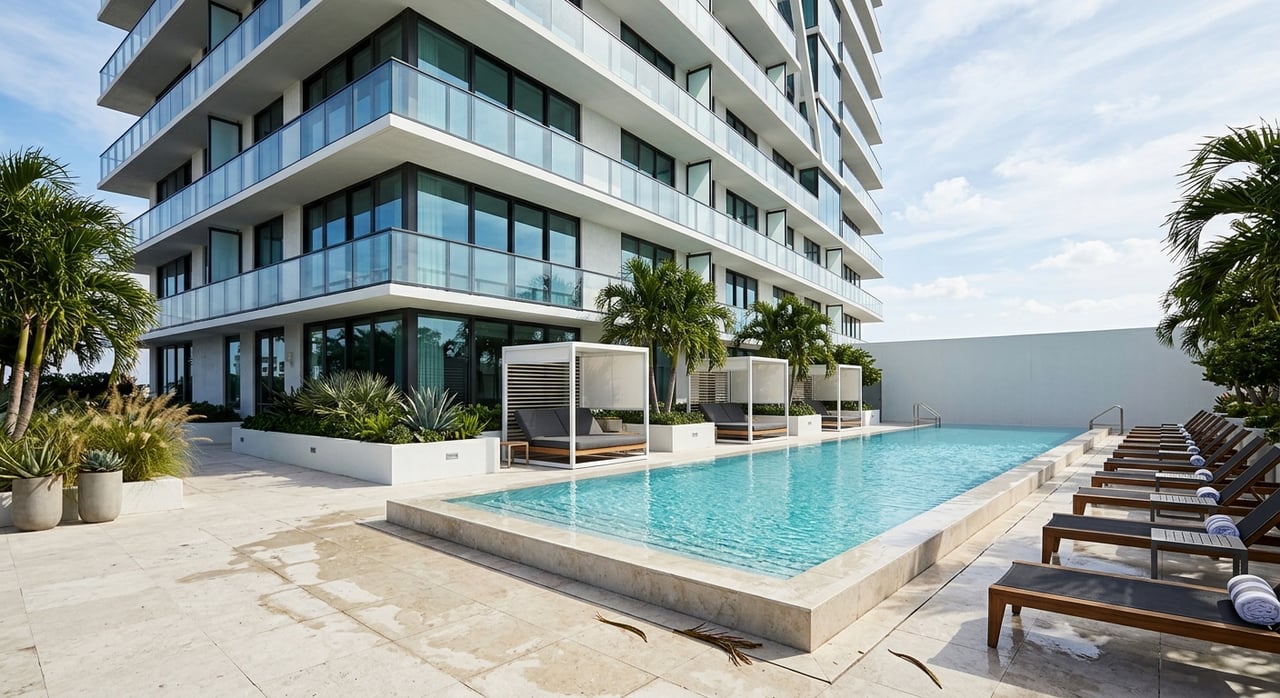
For example, St. Regis Residences says its private resort program spans more than 70,000 square feet and includes a Beach Club and a Sunset Pool Deck. Bentley Residences emphasizes its patented Dezervator car-elevator system and private heated pools on balconies, while Porsche Design Tower helped establish the Dezervator and sky-garage concept in the local market.
Those features can be compelling, but you should confirm what is private to your residence and what is shared across the building. Florida law requires condominium FAQ materials to identify assessment amounts by unit type, certain fees tied to recreational or commonly used facilities, and other structural details about how the condominium is created.
That disclosure matters because two towers can look similar in marketing while offering very different ownership economics. The long-term experience depends on the approved plan, the estimated operating budget, and how many residences share the same amenity base.
Look closely at unit line and view logic
In Sunny Isles Beach, view value is not just about “oceanfront” or “intracoastal.” It is about unit line, exposure, stacking, and the site configuration that supports the view package shown in marketing.
Florida’s required offering documents include the declaration, bylaws, estimated operating budget, and survey or site plan materials. Those documents help you compare renderings with the legally documented plan and ask a more precise question: is the view shown simply a marketing depiction, or is it supported by the recorded site layout?
This is where disciplined buyer representation becomes especially valuable. A premium line in the right stack may justify its pricing because of exposure, privacy, or balcony usability, while another line in the same building may look similar in a brochure but perform differently in daily living and resale positioning.
Understand deposits, escrow, and cancellation rights
Preconstruction contracts in Florida follow a staged disclosure and escrow framework, and buyers should understand that framework before placing a reservation deposit. This is one of the biggest differences between buying a future condo and buying a resale unit.
Under Florida law, until the developer files the required condominium documents with the state, the contract can be voidable by the purchaser. After you receive the required documents, you have 15 days to terminate in writing, and the developer generally may not close during that period unless you agree in writing to close sooner.
Reservation deposits are also regulated. A developer may accept reservation deposits before filing condominium documents only if it has a qualifying interest in the land and has filed a reservation program with an executed escrow agreement and reservation form, and those deposits must be escrowed and refundable upon written request.
For construction-stage payments, Florida law requires escrow of payments up to 10 percent of the sale price. Amounts above 10 percent remain in a special escrow account until closing unless the contract allows release after construction begins.
These rules create a structure, but the actual installment schedule is still project-specific. Before signing, you should know exactly who holds the escrow, what triggers each payment, and how the schedule lines up with construction milestones.
Ask for project-specific delivery timing
Estimated delivery dates should never be treated as one-size-fits-all. In Sunny Isles preconstruction, timing depends on the project’s approvals, permits, construction progress, and phasing.
For example, the St. Regis Residences materials list Phase I for 2028 and Phase II for 2029. At the same time, the city’s approved developments page shows Bentley Residences and Miami Beach Club at the approval stage, which is not the same as a completed building.
That is why it is smart to ask for phase dates, not just a broad completion promise. If you are planning around capital deployment, occupancy timing, or a future sale of another property, project-specific timing details matter.
Factor in warranties and future building realities
Florida law gives buyers implied developer warranties, which are important in a new-construction purchase. These include a 3-year warranty for the unit, a 3-year warranty for most other improvements, and separate warranty periods for roof, structural, and mechanical, electrical, and plumbing elements that can run up to 5 years depending on timing and turnover.
That protection is meaningful, but it does not replace careful evaluation upfront. In preconstruction, you are still underwriting sponsor credibility, projected budgets, amenity complexity, and delivery execution.
This also highlights a core difference from resale condo buying. In a resale building, you can review operating history and maintenance patterns, and in older Florida buildings there may also be milestone inspections and structural integrity reserve study requirements to review. In preconstruction, much of that future history has not been written yet, so your due diligence needs to be sharper on the front end.
Questions to ask before reserving
Before you place a reservation deposit in Sunny Isles Beach, keep your questions focused and specific:
- Who is the legal developer, and what comparable South Florida towers has the sponsor delivered?
- Who is the contractor, and what is their high-rise construction history?
- What is the exact deposit schedule, and who holds escrow?
- What documents are available now, and what remains pending?
- What do the FAQ and offering materials say about assessments, shared facility fees, and lease restrictions?
- What flood-zone, elevation, and insurance assumptions apply to the site?
- Is the project approved only, or has it moved into permitting or active construction?
- How does this unit line compare with others for exposure, privacy, and long-term livability?
In a market as image-driven as Sunny Isles, disciplined questions can protect both your capital and your lifestyle outcome.
Why local guidance matters in Sunny Isles
A luxury preconstruction purchase here is rarely just about choosing a beautiful residence. It is about understanding approvals, reading the sponsor’s history carefully, evaluating future building economics, and confirming how contract timing and escrow protections actually work.
That level of review is especially important in Sunny Isles Beach, where barrier-island conditions, complex amenity programs, and high-profile development pipelines create both opportunity and complexity. If you want a clear, discreet, and financially disciplined approach to evaluating Sunny Isles preconstruction opportunities, Isaac Malagon - Sotheby's can help you assess the details that matter before you commit.
FAQs
What should you verify first in a Sunny Isles preconstruction condo?
- Start by verifying the project stage, including whether the tower is marketed, city-approved, permitted, or already under construction.
How do Florida deposit rules work for preconstruction condos?
- Florida law regulates reservation deposits, escrow handling, and certain buyer cancellation rights, but each project’s payment schedule still needs to be confirmed in the contract and prospectus.
Why does flood risk matter for Sunny Isles Beach condo buyers?
- Sunny Isles Beach is on a barrier island, and the city says standard homeowners insurance does not cover flood damage and that NFIP coverage has a 30-day waiting period.
How can you compare Sunny Isles condo developers?
- Review the developer’s disclosed identity, experience, and completed portfolio, then compare the current project’s promises against what the sponsor has actually delivered in similar luxury high-rises.
What should you review about condo amenities in Sunny Isles?
- You should confirm whether amenities are private or shared, how many residences support them, and how they affect assessments and future operating costs.
What makes a Sunny Isles preconstruction purchase different from a resale condo purchase?
- In preconstruction, you are evaluating future delivery, sponsor credibility, budget assumptions, and planned amenities, while a resale condo also lets you study existing operating history and maintenance patterns.